Share on socials:
Balanced Diet for Hair Growth: Foods, Nutrients & Tips
Balanced Diet for Hair Growth: Foods, Nutrients & Tips
Balanced Diet
Hair growth is not only about shampoo, oil, serum, or treatment. What you eat every day also matters. Your hair is a living part of your body’s system, and like your skin, nails, muscles, and organs, it needs proper nutrition to stay healthy.
A balanced diet for hair growth does not mean eating one “magic food.” It means giving your body enough protein, iron, vitamins, minerals, healthy fats, and water regularly. Hair needs many nutrients to grow well, but diet is only one part of the story. Hair loss can also happen because of genetics, hormones, stress, medical conditions, scalp issues, medicines, or sudden weight loss. Mayo Clinic lists heredity, hormonal changes, medical conditions, medicines, stress, and tight hairstyles among common causes of hair loss.
So the goal of this blog is simple: help you understand how food supports hair, what nutrients matter, what foods you can include, and when diet alone may not be enough.
Quick Answer: Can Diet Really Help Hair Growth?
Yes, diet can support healthy hair growth. But it is important to understand this clearly: food supports hair health, but it does not cure every hair-loss problem.
If your hair fall is happening because of low protein, low iron, poor nutrition, crash dieting, or certain deficiencies, improving your diet may help over time. Nutritional deficiency can affect both hair structure and hair growth, and sudden weight loss or reduced protein intake can contribute to shedding.
But if your hair loss is due to male pattern baldness, female pattern hair loss, thyroid issues, PCOS, autoimmune conditions, scalp disease, or genetics, then only changing food may not be enough. In such cases, food can support your overall health, but proper diagnosis and treatment may still be needed.
That is why a balanced diet for hair growth should be seen as support, not as a guaranteed cure.
What Does a Balanced Diet for Hair Growth Really Mean?
A balanced diet means your plate has different types of nutrients, not just one type of food. For hair, this is important because hair growth depends on more than one nutrient.
Your diet should include:
- Protein for hair structure
- Iron for oxygen transport
- Zinc for normal body functions
- Vitamin D for overall health
- Vitamin C to support iron absorption
- Healthy fats for general skin and scalp health
- Whole grains and fruits for energy and micronutrients
- Enough water for overall body function
Hair is made mainly from a protein called keratin. Cleveland Clinic explains that protein is important for every structure in the body, including hair, and that hair, skin, and nails are made from keratin.
This means if someone is not eating enough protein for a long time, the body may not have enough building blocks to support healthy hair. But again, this does not mean everyone needs protein powder. Many people can meet protein needs through normal food.
Why Hair Needs Food From Inside
Hair grows from follicles under the scalp. These follicles receive nutrients through blood supply. So, what you eat can affect the internal environment that supports hair growth.
When the body does not get enough nutrients, it may focus on more important functions first. Hair is not essential for survival, so in times of poor nutrition, illness, stress, or crash dieting, hair may suffer.
This is why people sometimes notice hair fall after:
- sudden weight loss
- illness
- high stress
- very low-calorie dieting
- poor protein intake
- nutritional deficiency
- long gaps between meals
A balanced diet for hair growth helps by giving the body steady nutrition. It supports the system that supports your hair.
But the effect is not instant. Hair grows slowly. If poor diet is one reason for hair fall, improvement may take a few months after nutrition improves. That is why patience matters.
Best Nutrients for Healthy Hair
Protein is one of the most important nutrients for hair. Your hair is made mainly of keratin, a protein. Good protein sources include dal, beans, chickpeas, paneer, curd, milk, eggs, fish, chicken, soy, tofu, sprouts, and nuts.
Iron is also important because it helps carry oxygen in the body. Cleveland Clinic notes that iron carries oxygen to cells, which is important for growth processes, including hair growth. Low iron can be one of the nutritional reasons behind hair fall, especially in women, but iron supplements should not be taken blindly.
Zinc helps the body make proteins and DNA, and it supports normal immune function. NIH Office of Dietary Supplements explains that zinc helps the immune system and helps make proteins and DNA. Food sources include nuts, seeds, lentils, beans, dairy, eggs, seafood, and whole grains.
Vitamin D is often discussed in hair-loss conversations, but it should be checked properly if deficiency is suspected. Diet, sunlight exposure, and supplementation decisions should be guided by a doctor when needed.
Vitamin C does not directly “grow hair” like a magic ingredient, but it helps the body absorb iron from plant foods. This is useful when eating iron-rich vegetarian foods like lentils, beans, spinach, and seeds.
Biotin is popular for hair, but it is often overused in marketing. NIH states that biotin deficiency can include hair loss and brittle nails, but claims for biotin supplements are supported mainly by limited evidence unless there is a true deficiency.
This is important because many people start supplements without knowing if they need them.
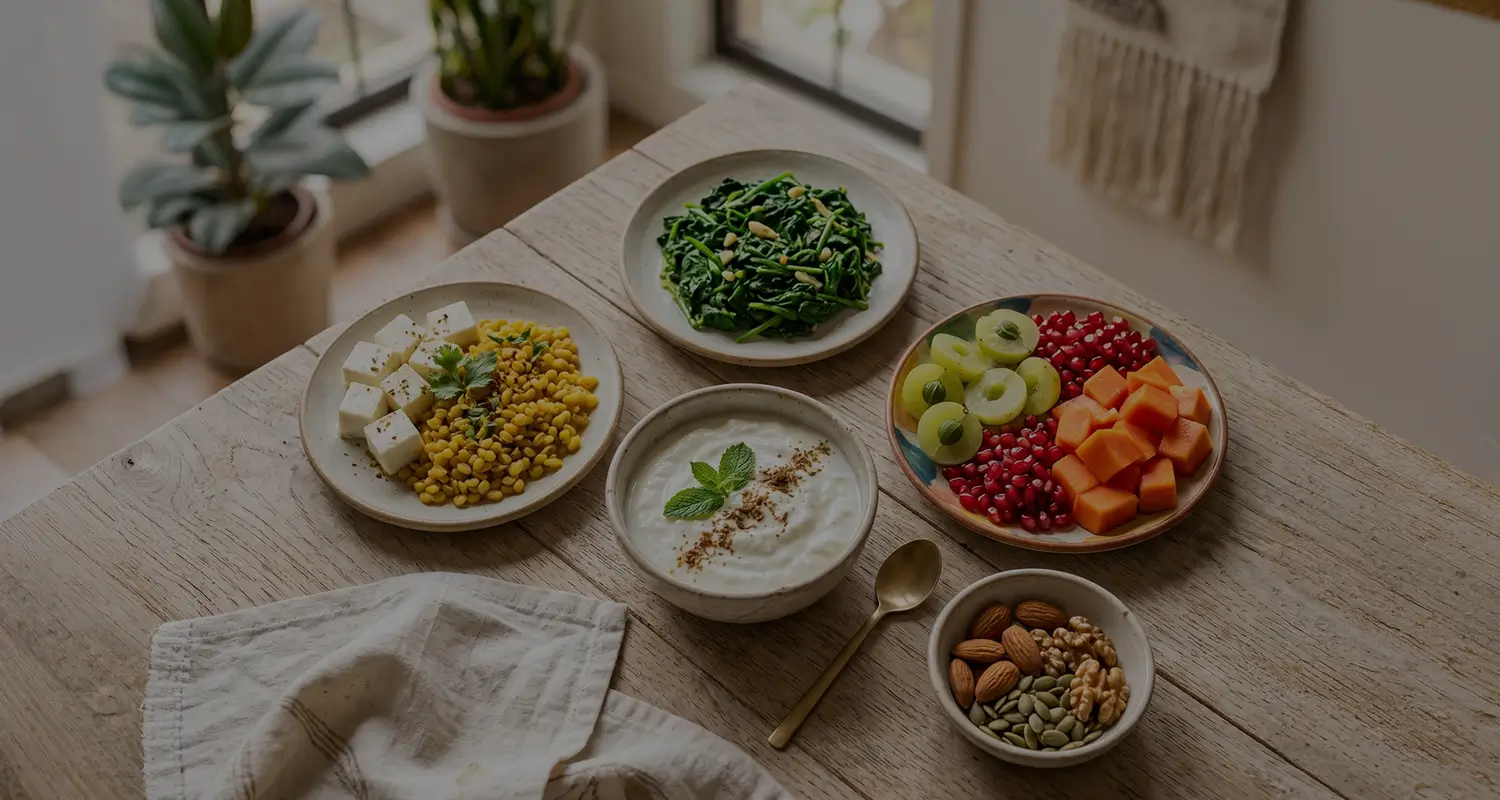
Best Foods to Add to Your Plate
A good hair-supporting diet is not expensive or complicated. Most useful foods are normal everyday foods.
You can include:
- Eggs for protein and other nutrients
- Dal, beans, rajma, chana, and lentils for protein and iron
- Curd, milk, and paneer for protein
- Fish for protein and healthy fats
- Nuts and seeds for minerals and healthy fats
- Leafy greens for micronutrients
- Fruits like amla, guava, orange, and berries for vitamin C
- Whole grains like roti, rice, oats, and millets for energy
- Vegetables for vitamins, minerals, and fiber
Cleveland Clinic lists lean protein, eggs, leafy greens, fatty fish, chia seeds, nuts, and other nutrient-rich foods as useful parts of a diet that supports hair health.
For Indian meals, you do not need a fancy diet chart. A simple plate can work well if it has enough variety.
For example, dal-rice with vegetables and curd is better than only rice with pickle. Roti with sabzi, dal, curd, and salad is better than only roti and tea. Eggs with whole-grain toast or poha with sprouts can be better than only biscuits and chai.
A balanced diet for hair growth is about consistency, not perfection.
Simple Indian Meal Tips for Hair Health
Most people fail with diet because they make it too complicated. The better approach is to improve normal meals.
For breakfast, try to include some protein. Instead of only tea and biscuits, choose eggs, sprouts, besan chilla, paneer, curd, poha with peanuts, oats with nuts, or dal-based options.
For lunch, keep a balanced plate. Add dal, curd, paneer, chicken, fish, eggs, beans, or soy along with roti/rice and vegetables.
For snacks, avoid only fried or packaged foods daily. You can include fruit, roasted chana, nuts, seeds, curd, makhana, or sprouts.
For dinner, keep it simple but not empty. A light dinner can still include protein and vegetables.
Easy meal ideas:
- Dal + rice + sabzi + curd
- Roti + paneer/tofu sabzi + salad
- Eggs + roti + vegetables
- Chana/rajma + rice + salad
- Fish/chicken + rice/roti + vegetables
- Sprouts chaat + curd
- Khichdi with dal + vegetables + curd
This kind of pattern is practical and easy to follow.
Foods and Habits That May Hurt Hair Health
No single food destroys hair. But certain habits can affect hair health over time.
Crash dieting is one of the biggest problems. When someone suddenly cuts calories or skips major food groups, the body may not get enough nutrients. Sudden weight loss and reduced protein intake are known triggers for shedding in some people.
Very low-protein diets can also be a problem. Harvard Health notes that inadequate protein can contribute to hair loss, although severe protein deficiency usually comes with other health concerns too.
Too much junk food can replace nutrient-rich foods. If your daily diet is mostly sugary drinks, fried food, packaged snacks, and low-protein meals, your body may not get enough of what it needs.
Skipping meals regularly can also affect overall health. Hair health needs regular nourishment, not random eating.
Also, do not take high-dose supplements without advice. AAD warns that taking too much of certain nutrients can worsen hair loss. Harvard Health also notes that too much vitamin A or selenium can contribute to increased hair loss.
This is why more is not always better.
Supplements: Helpful or Risky?
Supplements can help if you have a real deficiency. But taking random supplements “for hair growth” without testing is not a smart plan.
If someone has low iron, low vitamin D, or another confirmed deficiency, a doctor may recommend supplements. But if your levels are normal, extra pills may not help and can sometimes cause harm.
Biotin is a good example. Many people take biotin without checking if they are deficient. But true biotin deficiency is uncommon, and evidence for biotin helping hair growth in people without deficiency is limited.
A balanced diet for hair growth should come first. Supplements should be used only when needed, not as a replacement for food or diagnosis.
When Diet Is Not Enough
Diet is important, but it cannot solve every hair problem.
If your hairline is receding, your crown is thinning, your part line is widening, or your hair fall is continuing for months, you should not depend only on food. You need to understand the cause.
You should consult a dermatologist or hair specialist if you notice:
- sudden heavy shedding
- bald patches
- visible scalp
- widening part line
- receding hairline
- itching, redness, scaling, or pain on the scalp
- hair fall after illness, medicine, or major stress
- family history of hair loss
- hair fall that does not improve after lifestyle correction
AAD says effective hair-loss treatment begins with finding the cause, and without diagnosis, treatment may not work well.
This is especially important in MOFU content because the reader is already considering what to do next. The honest answer is: improve diet, but do not ignore diagnosis.
How to Build a Balanced Diet for Hair Growth
Start with your plate. You do not need to change everything overnight. Add one good habit at a time.
First, include protein in every major meal. Second, add fruits and vegetables daily. Third, include iron-rich foods like lentils, beans, leafy greens, eggs, meat, or fish based on your diet preference. Fourth, pair plant-based iron foods with vitamin C foods like lemon, amla, guava, or citrus fruits. Fifth, avoid crash diets and long meal gaps.
Also, drink enough water, sleep well, manage stress, and avoid smoking. These habits support overall health, which also supports hair health.
A balanced diet for hair growth works best when it becomes part of your daily routine, not a short-term challenge.
Final Takeaway
A healthy diet cannot guarantee thick hair for everyone. But poor nutrition can make hair weaker, increase shedding in some cases, and slow down recovery when deficiencies are present.
The best approach is balanced and realistic. Eat enough protein. Add iron-rich foods. Include fruits, vegetables, nuts, seeds, and healthy fats. Avoid crash dieting. Do not take random supplements. And if hair fall continues, get the cause checked.
Hair growth needs support from inside, but hair loss needs clarity.
A balanced diet for hair growth is a strong foundation. But if the problem is genetic, hormonal, medical, or scalp-related, the right diagnosis matters just as much as the right food.
FAQs
Can a balanced diet for hair growth stop hair fall?
It can help if poor nutrition or deficiency is one of the reasons for hair fall. But if hair fall is due to genetics, hormones, thyroid issues, PCOS, scalp disease, or another medical reason, diet alone may not stop it.
Which food is best for hair growth?
There is no single best food. Good options include eggs, dal, beans, lentils, curd, paneer, fish, nuts, seeds, leafy greens, fruits, and whole grains.
Can low protein cause hair fall?
Yes, low protein intake can contribute to hair shedding in some people, especially during crash dieting or poor nutrition. Hair is made mainly from protein, so regular protein intake matters.
Should I take biotin for hair growth?
Only if you need it. Biotin deficiency can cause hair-related symptoms, but taking biotin without deficiency may not help much. It is better to ask a doctor before starting supplements.
How long does diet take to show results in hair?
Hair grows slowly, so changes may take a few months to become visible. If hair fall is heavy or continues for months, do not wait only on diet. Get the cause checked.
When should I consult a doctor?
Consult a doctor if you have sudden shedding, bald patches, visible thinning, scalp itching, redness, pain, or hair fall that continues for more than a few months.
