Share on socials:
Does Wearing a Hat Cause Hair Loss? Myth vs Fact Explained.
Does Wearing a Hat Cause Hair Loss? Myth vs Fact Explained
Hair Loss
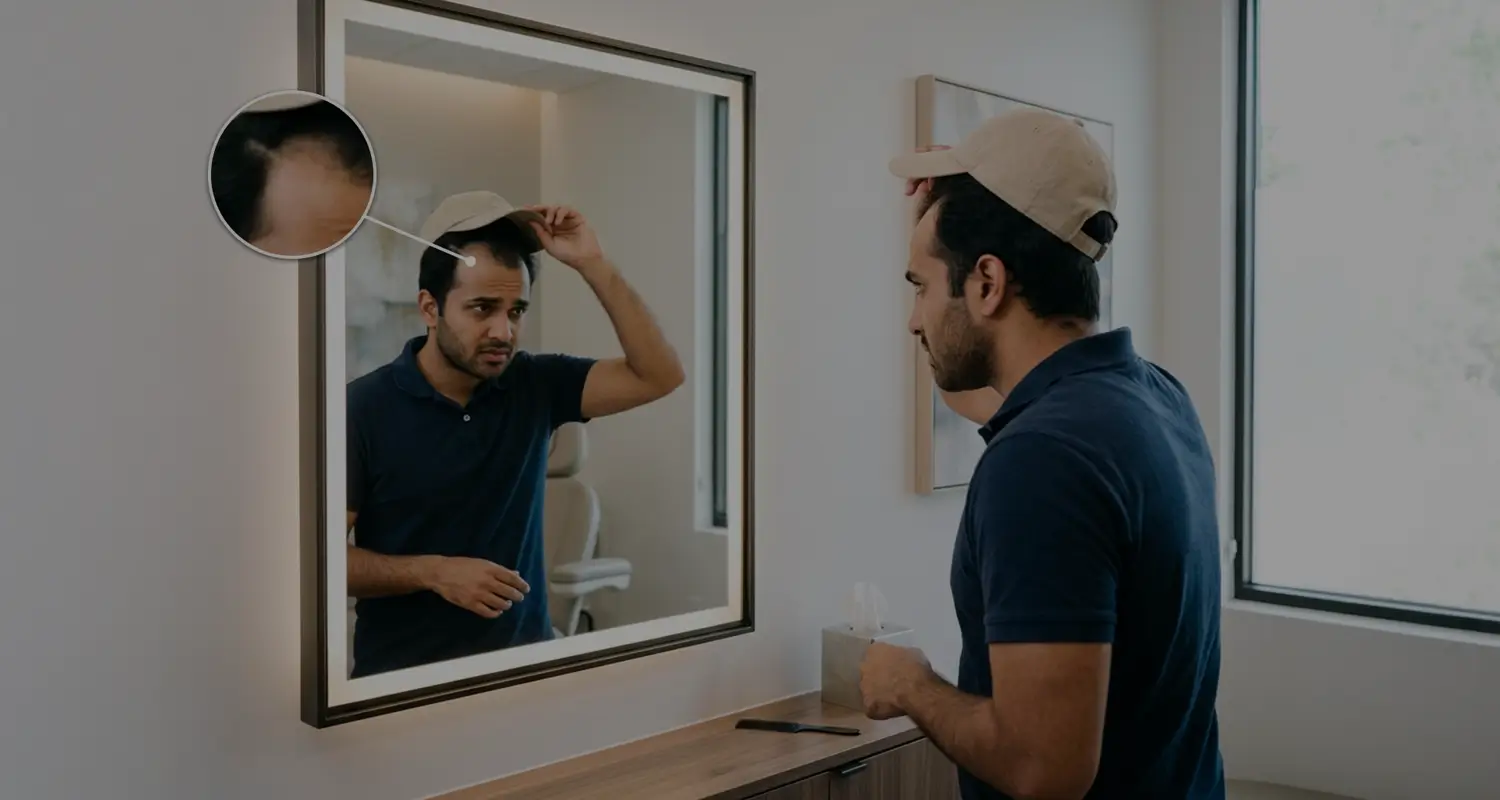
Many people wear a cap, helmet, or hat almost every day. Then one day they notice hair strands inside the cap, on the pillow, or in the shower. The first thought is usually simple: does wearing a hat cause hair loss?
It is a common question, and the fear is understandable. When you see hair inside something you wear on your head, it feels like the hat is pulling hair out. Some people also hear advice like, “Don’t wear caps too much, you will lose hair,” or “Wearing a hat every day is bad.” Because of this, many people start worrying about hats and hair loss even before understanding the real reason.
The simple answer is: normal hat use does not usually cause permanent hair loss. A clean, comfortable hat does not damage your roots by itself. Hair loss usually happens because of deeper reasons like genetics, hormones, stress, medical conditions, scalp problems, nutritional gaps, or hairstyles that pull the hair tightly. Mayo Clinic lists heredity, hormonal changes, medical conditions, medicines, stress, and tight hairstyles as common causes of hair loss.
But this does not mean hats never matter. A very tight hat, dirty cap, trapped sweat, or repeated friction can irritate the scalp or stress fragile hair. So the real answer is not fear-based. It is more balanced: hats are usually not the cause of baldness, but how you wear them can matter.
Quick Answer: Does Wearing a Hat Cause Hair Loss?
For most people, the answer is no. Wearing a normal hat does not directly cause baldness. Cleveland Clinic explains that wearing hats has not been shown to worsen hair thinning in the studies commonly discussed on this topic. In fact, one study of male identical twins found that daily hat wear was not linked with worse thinning at the temples.
This means the idea that Wearing a hat every day is bad is too simple and often misleading. Daily hat use is usually okay if the hat fits well, is clean, and does not pull your hair.
The confusion often happens because hair fall and hat use happen at the same time. A person may already have early pattern hair loss, but they start noticing it more when they remove their cap. The cap gets blamed, but the real reason may be genetics or hormones.
So if you are asking does wearing a hat cause hair loss, the better question is: Is the hat tight, dirty, or creating friction? Or is something else causing the hair fall?
Why Do People Connect Hats and Hair Loss?
People connect hats and hair loss because of what they see. If you remove your cap and find a few hairs inside it, it is easy to panic. But seeing hair inside your cap does not always mean the cap caused the hair to fall.
Hair naturally sheds as part of the normal hair cycle. Some hair strands that are already ready to shed may simply get caught inside the hat. The same thing can happen with a comb, pillow, towel, or shower drain.
Another reason is sweat. When you wear a hat for many hours, the scalp may feel warm, oily, or itchy. This can make people think the scalp is “blocked” or “not breathing.” But hair roots do not get their nutrition from air touching the scalp. Hair follicles receive nutrients through blood supply.
Some people also wear tight caps or helmets for long hours. If the hat leaves strong pressure marks or rubs the same area again and again, the scalp may feel irritated. This is not the same as saying every hat causes hair loss, but it does show why fit and hygiene matter.
Most myths come from half-truths. A hat can irritate the scalp if worn badly, but a normal hat does not usually make someone bald.
Myth vs Fact: “Wearing a Hat Every Day Is Bad”
The statement Wearing a hat every day is bad needs correction.
It is not the daily habit alone that matters. It is the condition of the hat, the fit, and your scalp health.
If your hat is loose enough, clean, breathable, and not pulling on your hair, it is usually safe to wear. But if the hat is very tight, sweaty, dirty, or worn over a tight hairstyle, it may create friction or irritation.
Think of it like shoes. Wearing shoes every day is normal. But wearing very tight, dirty shoes every day can hurt your feet. Hats are similar. The problem is not “hat.” The problem is pressure, friction, and poor hygiene.
So instead of believing Wearing a hat every day is bad, think more clearly:
- Is the hat too tight?
- Does it pull my hairline?
- Is it clean?
- Does my scalp itch after wearing it?
- Am I wearing it over wet or sweaty hair for long hours?
- Do I already have scalp irritation?
If the answer is yes to many of these, the hat may be making your scalp uncomfortable. But it still may not be the root cause of hair loss.
When Can Hats Create Hair or Scalp Problems?
Hats can create problems in a few situations. The first is tightness. If a cap or helmet is too tight and pulls at the hairline every day, it can cause stress around the hair follicles. This is more likely when there is repeated pressure or pulling in the same area for a long time.
The second issue is friction. Rough fabric, tight edges, or constant rubbing can make fragile hair more likely to break. Hair breakage is not always the same as hair loss from the root. Breakage means the hair shaft snaps. Hair loss means the hair falls from the follicle.
The third issue is hygiene. A hat can collect sweat, oil, dust, and product residue. If you keep wearing the same unwashed cap, it may irritate the scalp or make itching worse. This is especially important for people who already have dandruff, oily scalp, or sensitive skin.
The fourth issue is wearing a hat over wet hair for long hours. This may not directly cause baldness, but it can make the scalp feel uncomfortable and may increase irritation in some people.
This is why the topic of hats and hair loss needs nuance. Hats are not usually the villain, but poor hat habits can make scalp problems worse.
What Actually Causes Hair Loss?
Most hair loss is not caused by hats. The common causes are usually internal, genetic, hormonal, or medical.
For men, genetic pattern hair loss often starts with a receding hairline or thinning at the crown. For women, pattern hair loss may show as widening of the part line or reduced volume. AAD explains that hereditary hair loss is the most common cause of hair loss worldwide and that early treatment can help slow or stop hair loss in many cases.
Stress can also lead to hair shedding. This type of shedding may happen a few months after illness, emotional stress, surgery, weight change, or major life events. In these cases, people may blame shampoo, water, helmets, or hats, but the trigger may be something else.
Hair loss can also happen because of thyroid problems, low iron, certain medicines, hormonal changes, scalp infections, or autoimmune conditions. This is why guessing the cause is risky.
AAD says effective hair-loss treatment begins with finding the cause, and a dermatologist can help diagnose the reason behind hair loss. Mayo Clinic also notes that doctors may ask about diet, hair care routine, medical history, and family history before diagnosis.
So if someone keeps asking does wearing a hat cause hair loss, the honest medical answer is: sometimes the hat is being blamed because it is visible, but the real cause may be happening under the surface.
Can Tight Hats Cause Traction Alopecia?
A very tight hat may contribute to hair problems if it creates repeated pulling or pressure, but this is not common with normal hat use.
The condition most related to pulling is called traction alopecia. Traction alopecia happens when hair is repeatedly pulled tight over time. AAD explains that hairstyles that pull on the hair can cause this type of hair loss, and if a hairstyle feels painful, it is too tight. Mayo Clinic also lists tight hairstyles such as pigtails or cornrows as a cause of traction alopecia.
This usually happens more with tight ponytails, tight buns, extensions, braids, or hairstyles that pull on the same area. But the same logic can apply if headwear is extremely tight and repeatedly stresses the hairline.
This is where the myth has a small piece of truth. A normal cap is not likely to cause baldness. But repeated pulling, pressure, or friction is not good for hair.
If your hat feels painful, leaves strong marks, pulls at the front hairline, or causes scalp soreness, change the fit. Hair care is not only about products. It is also about reducing unnecessary stress on the hair and scalp.
How to Wear Hats Without Hurting Your Hair
You do not need to stop wearing hats completely. Hats are useful for sun protection, style, work, travel, sports, and daily comfort. The goal is not to fear hats. The goal is to wear them smartly.
Here are simple habits that help:
- Choose a hat that feels comfortable, not tight.
- Avoid hats that pull the front hairline.
- Wash your caps regularly.
- Let sweaty hats dry properly before wearing again.
- Do not wear the same dirty cap every day.
- Avoid wearing tight hairstyles under a tight hat.
- Avoid keeping a wet scalp covered for long hours.
- Use a softer inner lining if friction bothers your hair.
- Take breaks if you wear helmets or caps for many hours.
- If your scalp itches often, get the scalp checked.
These habits are especially useful if you wear hats daily. The claim Wearing a hat every day is bad becomes less relevant when the hat is clean, comfortable, and not causing pulling.
Should You Stop Wearing Hats If You Already Have Hair Fall?
Not always.
If you already have hair fall, you can still wear a hat as long as it is comfortable and clean. Stopping hats may not solve the issue if the real cause is genetic hair loss, stress, hormones, or a scalp condition.
However, if your scalp becomes itchy, red, painful, or irritated after wearing a hat, it makes sense to pause and observe. You can also try a looser hat, cleaner cap, or softer fabric. If the problem continues, the scalp should be examined.
You should not self-diagnose based only on what you see inside your cap. A few hair strands inside a hat do not prove that the hat caused hair loss.
The real question is not only does wearing a hat cause hair loss. The more useful question is: why is my hair falling, and is there a pattern?
When Should You See a Doctor?
You should consider seeing a dermatologist or hair specialist if hair fall continues, becomes visible, or comes with scalp symptoms.
See a doctor if you notice:
- hairline going back
- crown thinning
- widening part line
- sudden heavy shedding
- bald patches
- itching, redness, pain, or burning
- dandruff that does not settle
- scalp infection signs
- hair loss after illness or medicine
- family history of pattern hair loss
Hair loss can have many causes, and the same treatment does not work for everyone. AAD says that without an accurate diagnosis, treatment is often ineffective. That is why proper assessment matters.
For a TOFU blog, this is the most important message: do not panic, but do not keep guessing forever.
Final Takeaway: Is the Hat Really the Problem?
So, does wearing a hat cause hair loss? In most cases, no.
A normal, clean, comfortable hat does not usually cause permanent hair loss. The idea that Wearing a hat every day is bad is too broad. Daily hat use is usually fine if the hat is not tight, dirty, or irritating your scalp.
The real connection between hats and hair loss is mostly about pressure, friction, sweat, hygiene, and scalp sensitivity. These things can make existing problems worse, but they are not usually the main reason for baldness.
Most hair loss happens because of genetics, hormones, stress, medical conditions, nutrition gaps, scalp problems, or tight hairstyles. That is why the right step is not fear. It is clarity.
If your hair fall is mild and occasional, check your habits. Keep your hat clean, avoid tight fits, and take care of your scalp.
But if your hair is thinning, your scalp is visible, or shedding continues for months, do not blame the hat and move on. Get the cause checked.
At KERA, the approach should be simple: understand first, decide later. Hair loss deserves calm, medical clarity not myths, panic, or guesswork.
FAQs
1. Does wearing a hat cause hair loss permanently?
Usually, no. Normal hat use does not cause permanent hair loss. But a very tight hat that pulls or rubs the same area for a long time may irritate the scalp or contribute to hair breakage.
2. Is Wearing a hat every day is bad for hair?
No, not always. Wearing a hat every day is bad only when the hat is too tight, dirty, sweaty, or causing irritation. A clean and comfortable hat is usually fine.
3. What is the real connection between hats and hair loss?
The real connection between hats and hair loss is not the hat itself. It is usually tightness, friction, poor hygiene, or trapped sweat. These may irritate the scalp but do not usually cause baldness by themselves.
4. Can tight caps damage the hairline?
Very tight caps may stress the hairline if they pull or rub the same area daily. This is why fit matters. If your cap feels painful or leaves deep pressure marks, it is too tight.
5. Can helmets cause hair loss?
A helmet does not usually cause hair loss by itself. But a tight or dirty helmet may cause friction or scalp irritation. Genetics and hormones are much more common causes of pattern hair loss.
6. Should I stop wearing hats if I already have hair fall?
You do not always need to stop. Wear a clean, loose, comfortable hat. But if hair fall continues, your scalp is visible, or you have itching and redness, it is better to get a proper diagnosis.
