
Share on socials:
Female Pattern Baldness
Female Pattern Baldness: Causes, Early Signs & Effective Treatment Options
Female Pattern Baldness
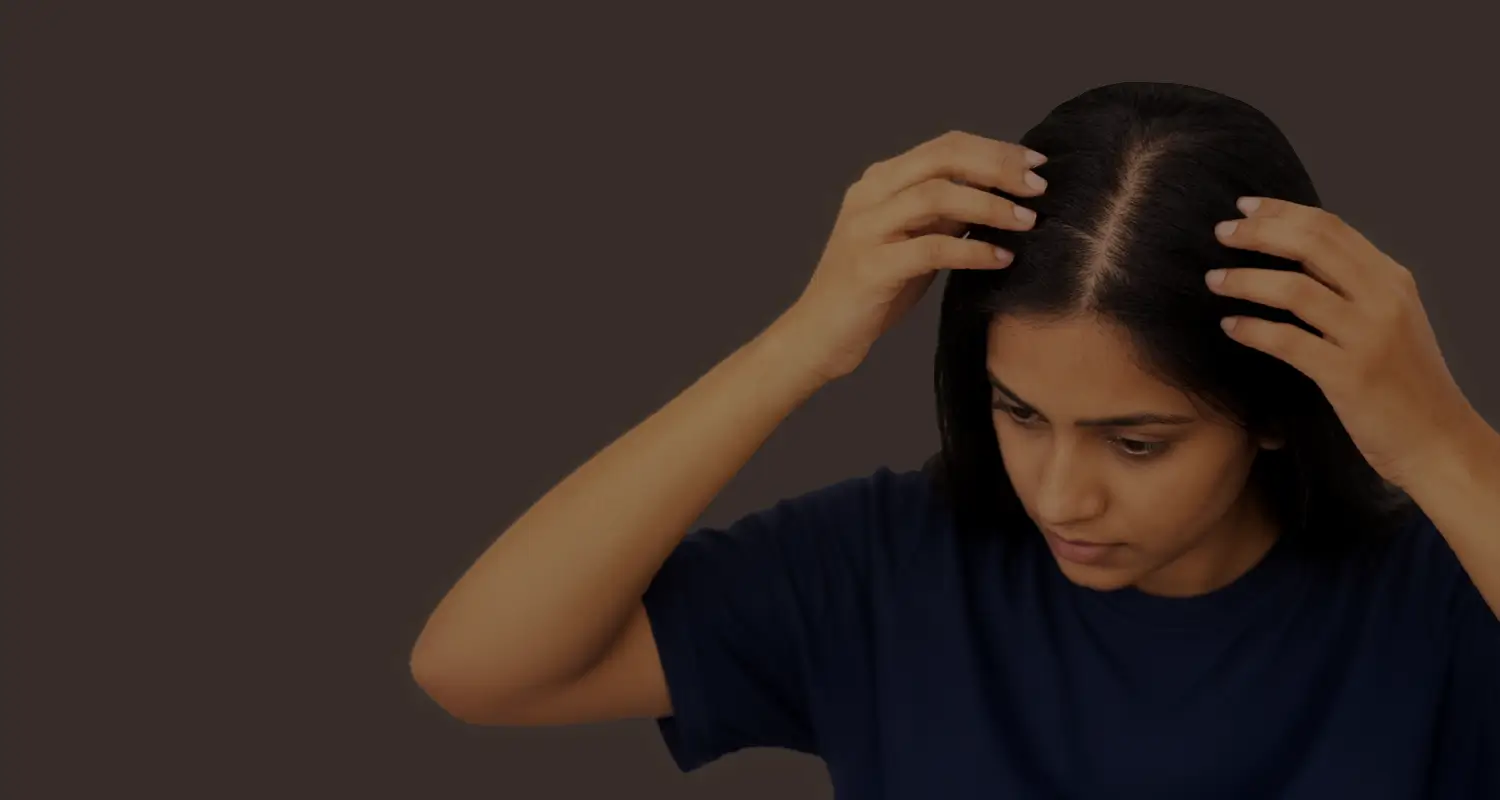
Hair thinning in women rarely starts with a dramatic bald patch. It often begins quietly. A slightly wider parting. Less volume in photos. A ponytail that feels thinner than it used to. This is commonly called female pattern baldness, medically known as female pattern hair loss (FPHL) or androgenetic alopecia in women. It is one of the most common causes of progressive hair thinning in adult females. What matters most is this:
FPHL is treatable, especially when caught early. But the right treatment depends on the right diagnosis.
What Is Female Pattern Baldness?
Female pattern baldness is a non-scarring hair loss condition that typically causes diffuse thinning over the crown (top of the scalp) while often preserving the frontal hairline.
Unlike some other hair loss conditions, it tends to be gradual and progressive. Many women don’t notice it until density has reduced significantly.
What Causes Female Pattern Baldness?
FPHL happens because susceptible hair follicles gradually produce thinner, shorter hairs over time. This process is called miniaturization and is part of androgenetic alopecia biology.
The most common contributors include:
Genetics
If there is a family history of pattern hair loss, risk increases. (FPHL can come from either side of the family.)
Hormonal sensitivity
Androgens (including DHT) play a clearer role in male pattern hair loss. In women, androgens may contribute, but the exact hormonal mechanisms can vary, and not every woman with FPHL has elevated androgens.
Age and menopause
FPHL becomes more common with age, and many women notice progression around peri-menopause and post-menopause.
Conditions that can worsen or mimic FPHL
Thinning can overlap with other causes of hair shedding (like thyroid disorders, iron deficiency, PCOS, and more). That’s why diagnosis matters.
Early Signs of Female Pattern Baldness
Here are early clues women commonly describe:
- Widening part line (the most classic early sign)
- Reduced volume at the crown
- Scalp becoming more visible under bright light
- Smaller ponytail circumference
- More shedding plus slow regrowth (hair feels like it never “fills back in”)
A key detail:
FPHL is often more about density loss than sudden clumps of hair coming out.
Female Pattern Baldness vs Hair Shedding
One of the most common confusions is mixing up FPHL with telogen effluvium (TE).
- FPHL: gradual thinning + miniaturization pattern
- TE: sudden shedding often triggered by stress, illness, weight loss, postpartum changes, iron deficiency, etc. (Hair density can recover if the trigger is addressed.)
Many women have both at the same time, which is why DIY diagnosis often goes wrong.
How Is Female Pattern Baldness Diagnosed?
A dermatologist-led evaluation usually includes:
- History and symptom timeline
- Scalp examination (pattern, density, miniaturization clues)
- Hair pull test and clinical photography
- Sometimes lab tests to rule out common contributors (thyroid issues, anemia/iron problems, hyperandrogenism based on symptoms)
The goal is not just to label it “hair fall.”
The goal is to identify what kind of hair loss you have, and whether it is stable, progressive, reversible, or overlapping.
Effective Treatment Options for Female Pattern Baldness
1) Topical Minoxidil
Topical minoxidil is widely considered the first-line treatment for FPHL, and is the only FDA-approved medication specifically for female pattern hair loss in the U.S.
What to know:
- Needs consistent use for months to judge response
- Helps many women slow progression and improve density
- If stopped, benefits typically reduce over time
Important: minoxidil treats the follicle environment and growth cycle. It is not a “one-time cure.”
2) Antiandrogen therapy (Doctor-guided, off-label)
For select patients, especially when clinical signs suggest androgen involvement, dermatologists may consider antiandrogen options such as spironolactone (and others, depending on the case). Evidence exists, but these treatments require medical supervision and appropriate patient selection.
This is not a self-medication category.
3) Low-dose oral minoxidil
Low-dose oral minoxidil is increasingly used off-label by clinicians for hair loss, but dosing, suitability, and monitoring must be individualized.
4) PRP (Platelet-Rich Plasma) as an adjunct
PRP is a popular in-clinic option. The research overall suggests potential benefit for some patients, but results can vary and protocols differ. Large reviews still describe the space as evolving and not perfectly standardized.
Best way to position PRP for KERA:
Supportive therapy that may improve hair parameters in some patients, used alongside a core plan rather than as a standalone promise.
5) Low-level laser/light therapy (LLLT)
LLLT has been studied as a non-drug option for pattern hair loss (including women), with mixed-to-moderate evidence depending on device and protocol. It can be considered as an adjunct in suitable cases.
6) Hair transplant
Female hair transplant can be appropriate in selected women, but it requires careful assessment of
- Pattern stability
- Donor density and donor safety
- Diffuse thinning risk
This is where surgeon-led evaluation matters most.
What Does Not Work (Or Is Often Overpromised)
A lot of products claim to “stop female baldness.” But FPHL is follicle miniaturization driven. Oils, home remedies, and most shampoos may improve hair texture or scalp feel, but they do not reverse miniaturization.
If someone is noticing progressive thinning, relying only on cosmetic fixes usually delays effective intervention.
When Should You See a Specialist?
Consider an evaluation if you notice any of these:
- widening parting over months
- crown thinning that’s slowly progressing
- strong family history of pattern hair loss
- hair thinning worsening after your 30s or around hormonal shifts
- shedding that doesn’t settle after 3–6 months
The earlier FPHL is identified, the more you can preserve.
A KERA Note on Approach
At KERA, the focus is not on “quick fixes.”
It is a diagnosis, expectation-setting, and a long-term plan, led by a dermatologist and hair transplant surgeon.
Because with female hair loss, the smartest treatment is the one designed for your cause, not someone else’s routine.
